
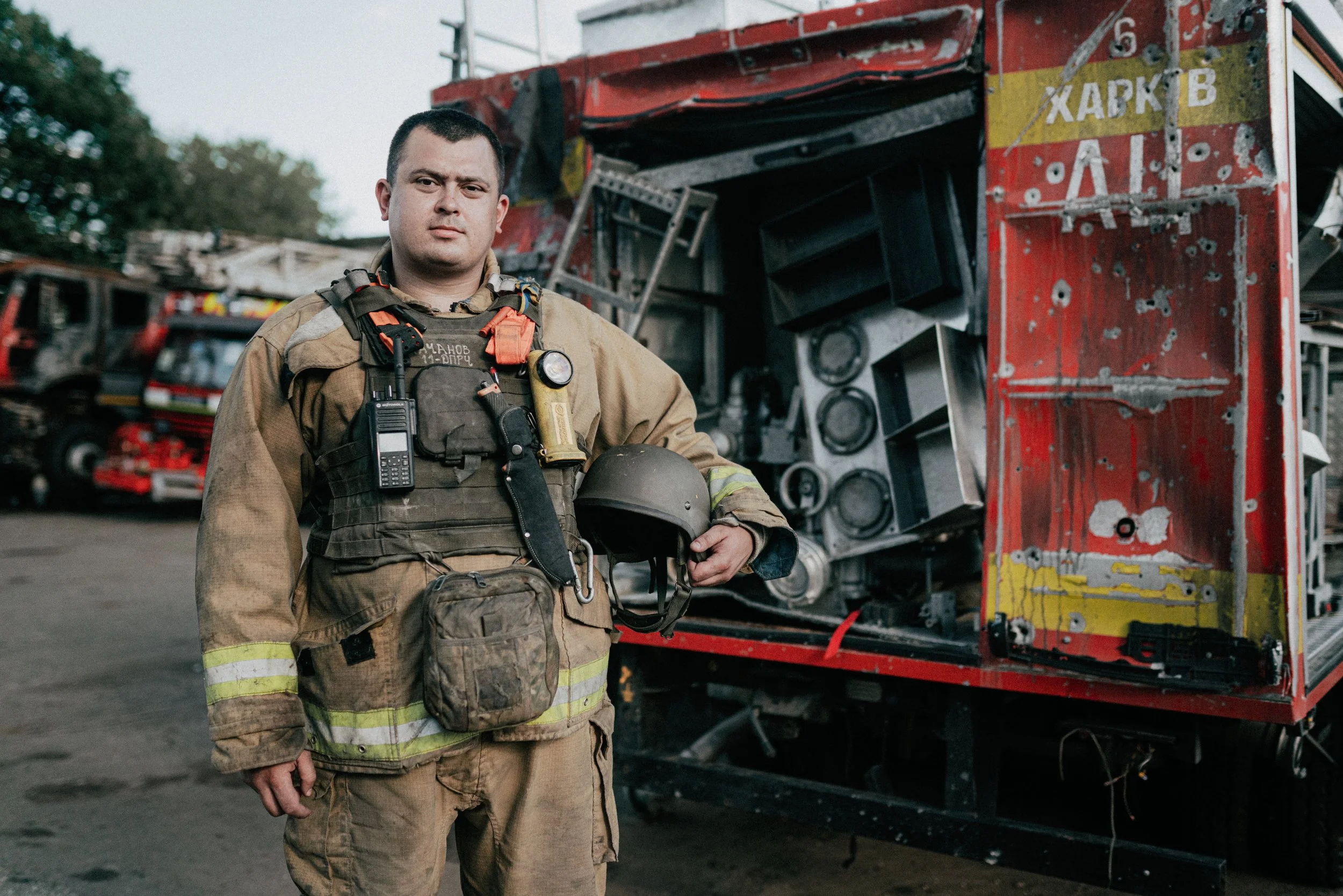
Brave Minds began with a visit to a fire station in Kharkiv.
In December 2022, British documentary photographer Edward Matthews travelled to Kharkiv to document firefighters working during the war. It was his first-hand experience of their work that revealed the reality behind the headlines: long shifts, unimaginable scenes of destruction, constant danger and the emotional weight of being responsible for other people's lives.
In 2024, Edward returned to Ukraine to film a documentary about support for Ukrainian rescuers. While working alongside emergency crews, one thing became increasingly clear. Equipment and training were essential, but there was another need that was much harder to see: the psychological pressure rescuers were carrying.
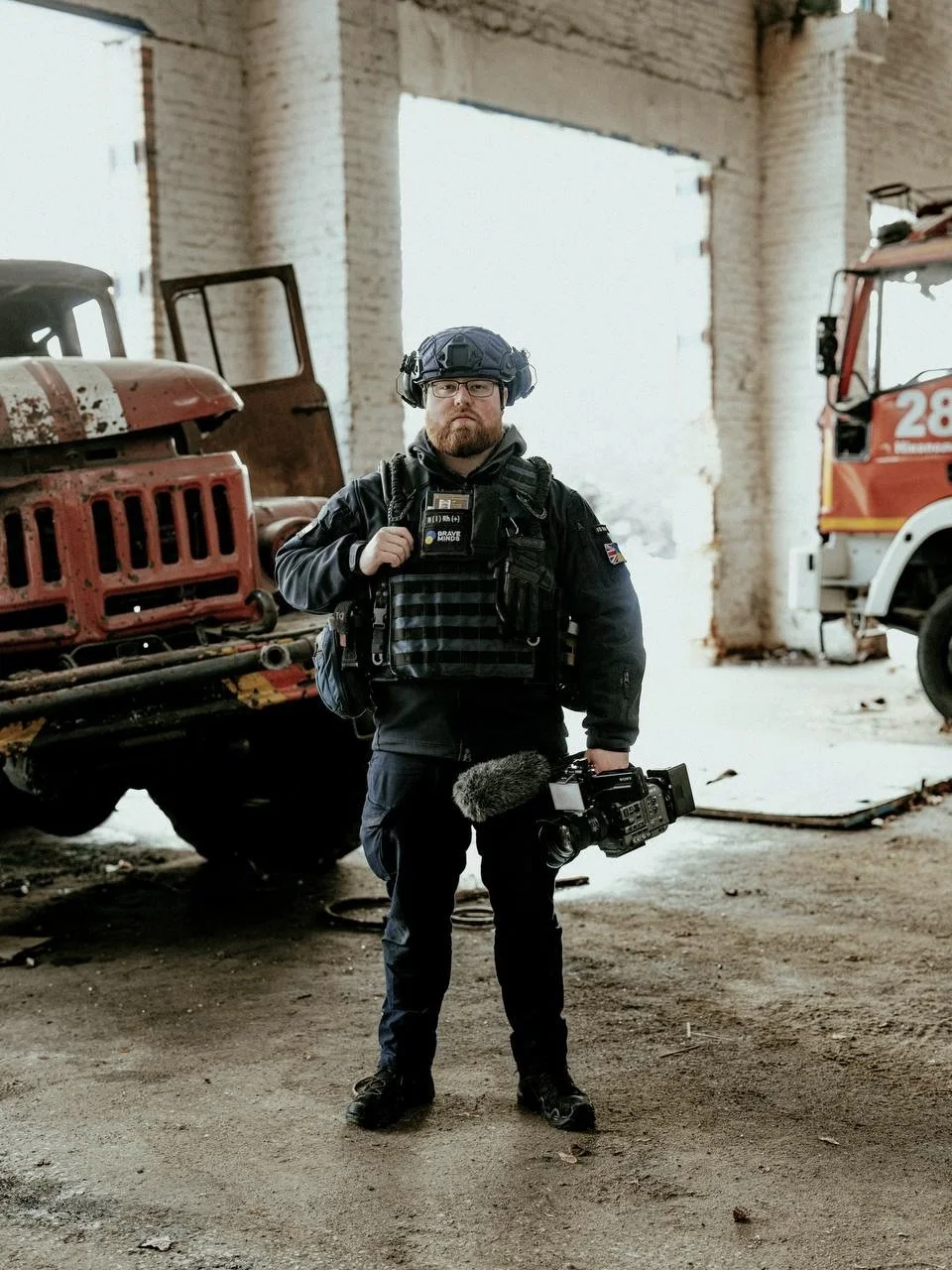
“Over the years, I’ve witnessed a lot of pain through my work. But it was the invisible scars carried by Ukrainian rescuers that affected me most. Seeing what they endure, often without the support they need, made it impossible for me to simply walk away. That became the motivation to do something — and ultimately led to the creation of Brave Minds.”
— Edward Matthews, Brave Minds project manager
Since the full-scale invasion, the work of Ukrainian firefighters has changed dramatically. They respond not only to fires and collapsed buildings, but to the consequences of missile strikes, repeated attacks, secondary strikes and unexploded ammunition. They witness loss on a scale that is difficult to comprehend. They may be unable to save everyone, and sometimes they lose their own colleagues.
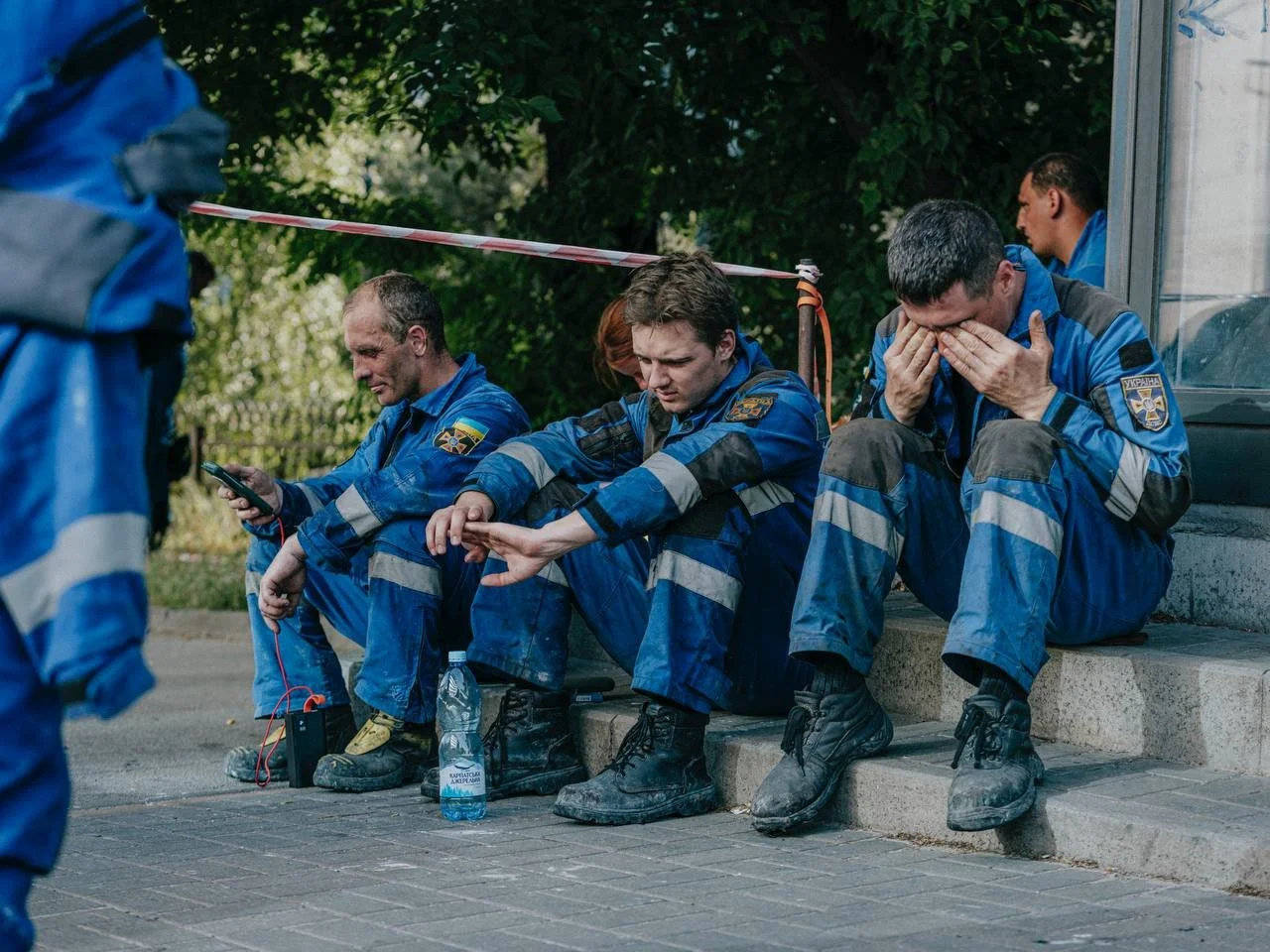
Rescuers from the Mobile Rescue Centre take a brief moment to rest during a difficult shift. Kyiv, June, 2025
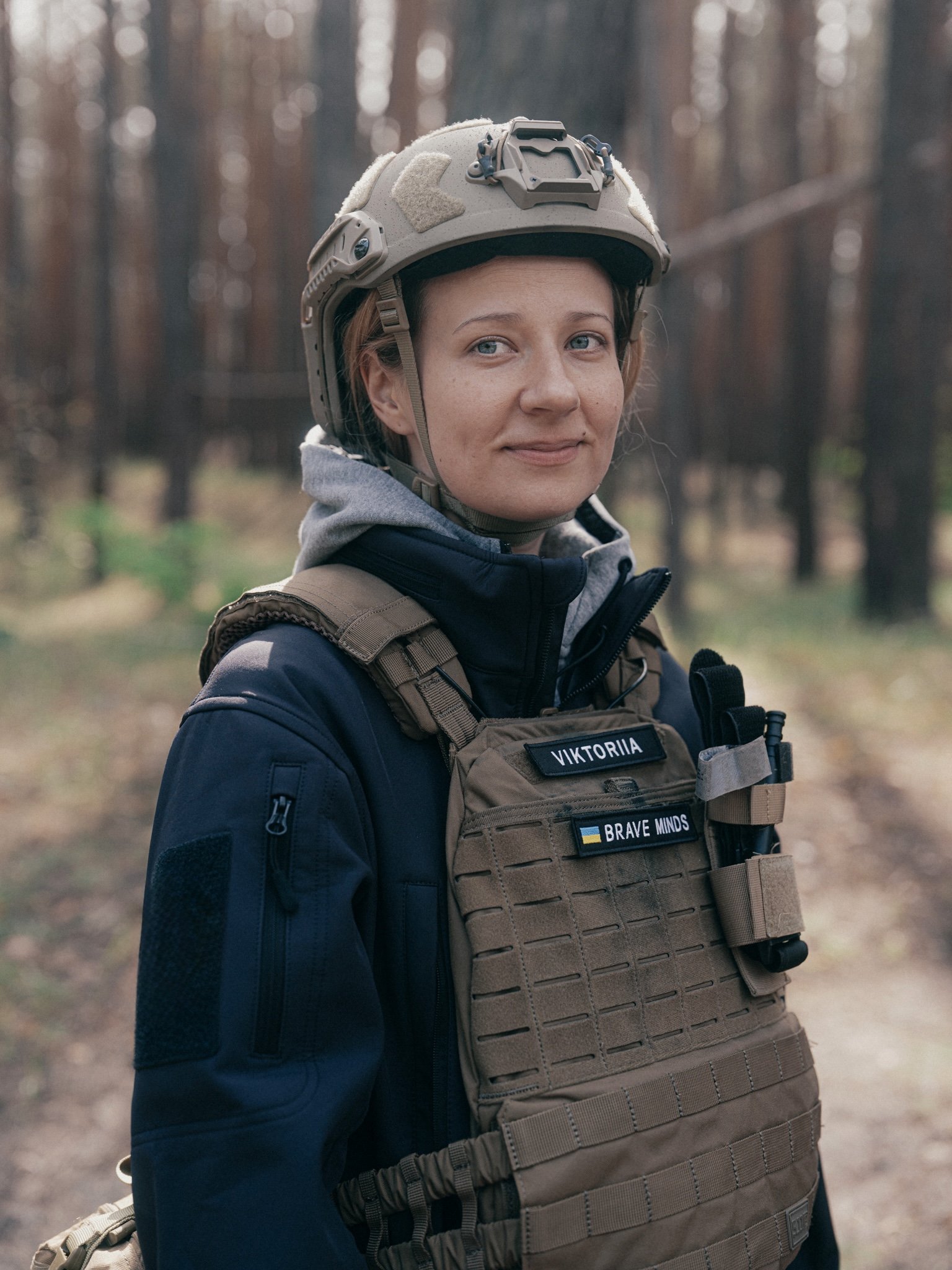
“Firefighters often carry what they have seen and experienced silently. Many of them have been taught that showing vulnerability is a sign of weakness, so they keep their emotions to themselves rather than talking about them. But when difficult experiences and personal struggles are constantly suppressed, they can build up over time, leading to persistent tension, anxiety and, in some cases, panic attacks.
Creating a safe space where firefighters can speak openly about what they are going through is an important part of building psychological resilience.”
— Viktoriia Kryvolapchuk, Lead Psychologist at Brave Minds
It was from this understanding that Brave Minds was born.
Working together with Viktoriia, a Ukrainian psychologist who was volunteering with the project, Edward developed a programme focused specifically on the mental health and wellbeing of Ukrainian rescuers. What began as an idea became an independent support programme offering confidential psychological support, crisis assistance and self-help resources delivered by Ukrainian psychologists.
Today, Brave Minds is a fully independent project. In 2026, we established our full independence from the British organisations that originally supported the project. We are not accountable to or dependent on either British or Ukrainian organisations.
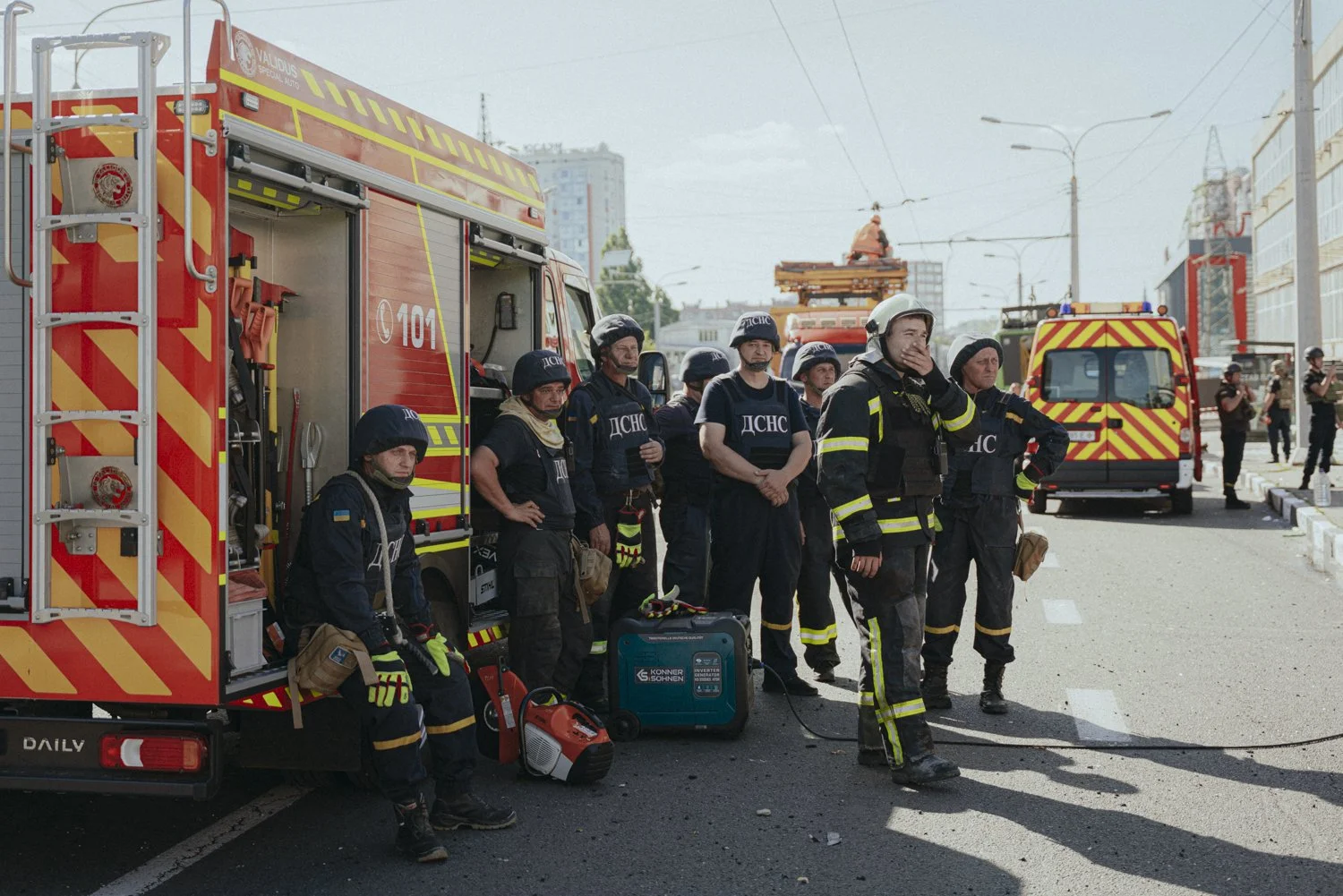
Rescuers in Kharkiv
We do, however, work in cooperation with the State Emergency Service of Ukraine (DSNS). This cooperation allows us to reach rescuers and introduce them to the support available to them, but it does not mean that Brave Minds shares information about the people who use our service.
Confidentiality is at the heart of our work. We do not provide personal information or any data that could identify an individual. What a rescuer discusses during a psychological session remains between them and their therapist.
There is no single way to use our service. For one person, it may be one conversation at a difficult moment. For another, it may become ongoing therapy. The choice belongs entirely to the person seeking support.
And that matters because, as Viktoriia puts it, psychologists do not do the majority of the work. We may contribute to around 20 percent of the outcome — the greatest part of the work is done by the person themselves.
Our role is to make sure they do not have to do that work alone.
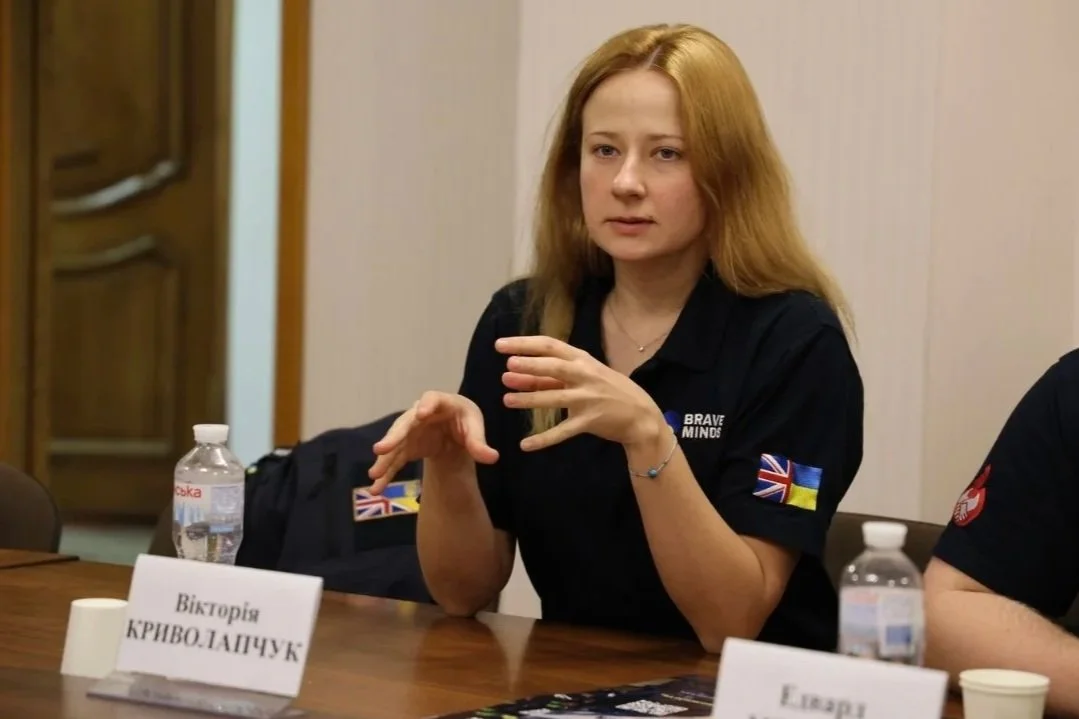
Brave Minds is a small team with a shared purpose.
Viktoriia Kryvolapchuk, our lead psychologist, works directly with rescuers and leads group sessions.
Edward Matthews, our project manager, coordinates the programme, works with our partners and makes sure we understand what rescuers need on the ground.
Mariia Oliinyk, another psychologist on our team, provides psychological support remotely and joins some of our visits in person.
Tania Mashchenko, our content manager, documents our work and helps share the stories of rescuers and the importance of psychological support with a wider audience.
But Brave Minds is ultimately about the people we work with.
We believe that psychological resilience does not mean never being afraid, never feeling overwhelmed or never needing help. It means having the tools, support and safe environment needed to recover when the pressure becomes too much.
Every time a rescuer tells us that they feel less anxious, that their panic attacks have stopped, that their mood has improved, or that they have started noticing small moments of happiness again, we see it as a victory.
Because even the bravest minds need support.
