
Brave Minds exists to make psychological support accessible to the people who spend their lives helping others.
Our work starts on the ground.
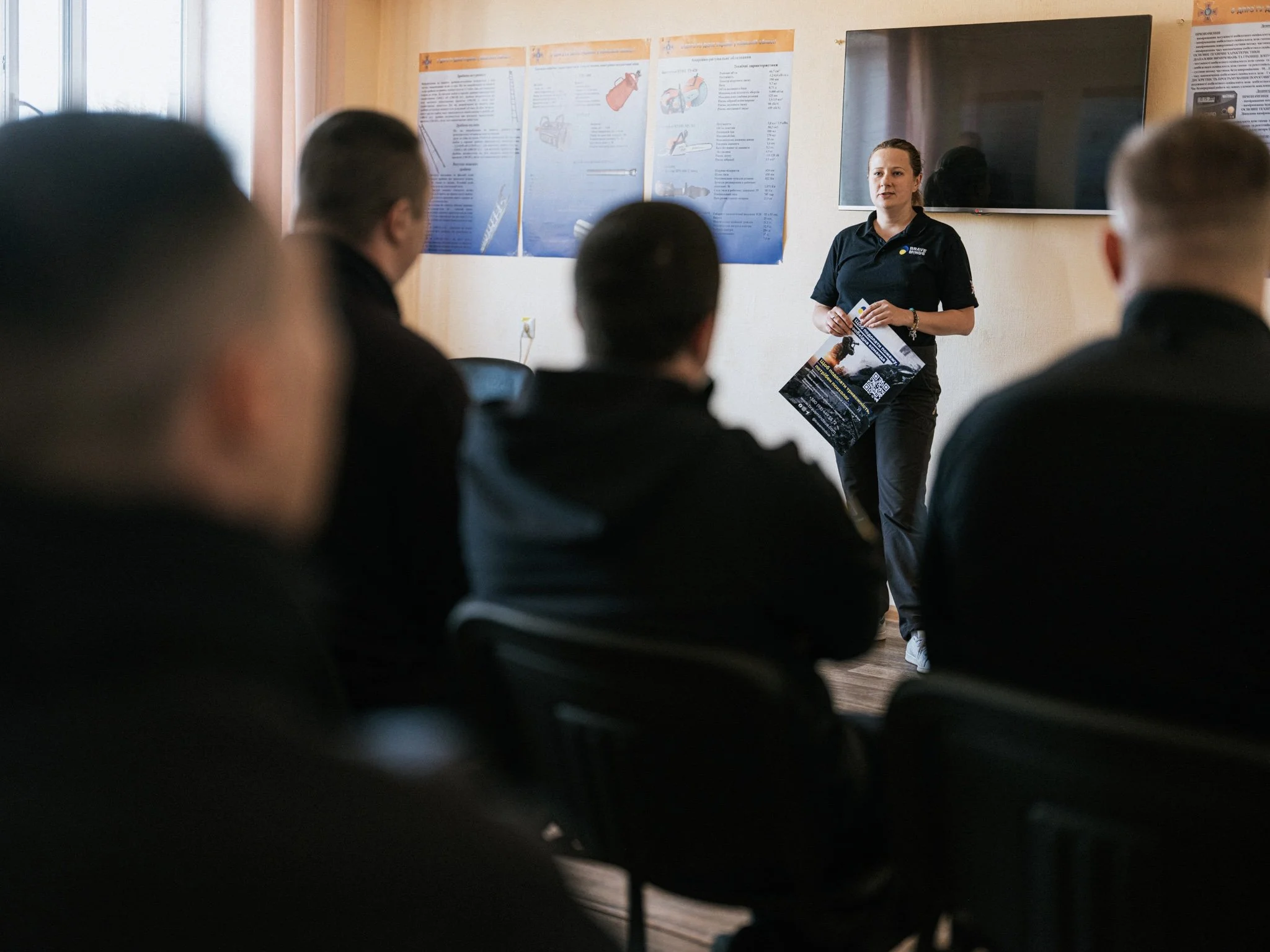
As part of our cooperation with the State Emergency Service of Ukraine (SESU), we visit fire stations across Ukraine to meet rescuers in person, introduce our project and make sure they know that psychological support is available to them — completely free of charge and confidentially.
So far, we have visited every fire station in Kyiv, as well as stations in other parts of the country, including Kharkiv, Rivne, Dnipropetrovsk and Chernihiv. We have plans to reach every accessible region as soon as we can.
These visits are an important part of how Brave Minds works.
For many rescuers, speaking to a psychologist can feel unfamiliar or even uncomfortable. Simply telling someone that psychological support exists is not always enough. Trust has to be built.
That is why we go to them.
We meet rescuers where they work, talk to them face to face and introduce ourselves as real people rather than an abstract organisation. We explain who Brave Minds is, what our psychologists can offer and, most importantly, that they can reach out whenever they feel they need support.
During our visits, we also hold group sessions with rescuers.
These sessions provide an opportunity to pause, talk and release some of the tension that builds up through their work. They can hear how others are coping, recognise that their own reactions are not unusual and begin to feel more comfortable talking about difficult experiences.
This kind of openness matters.
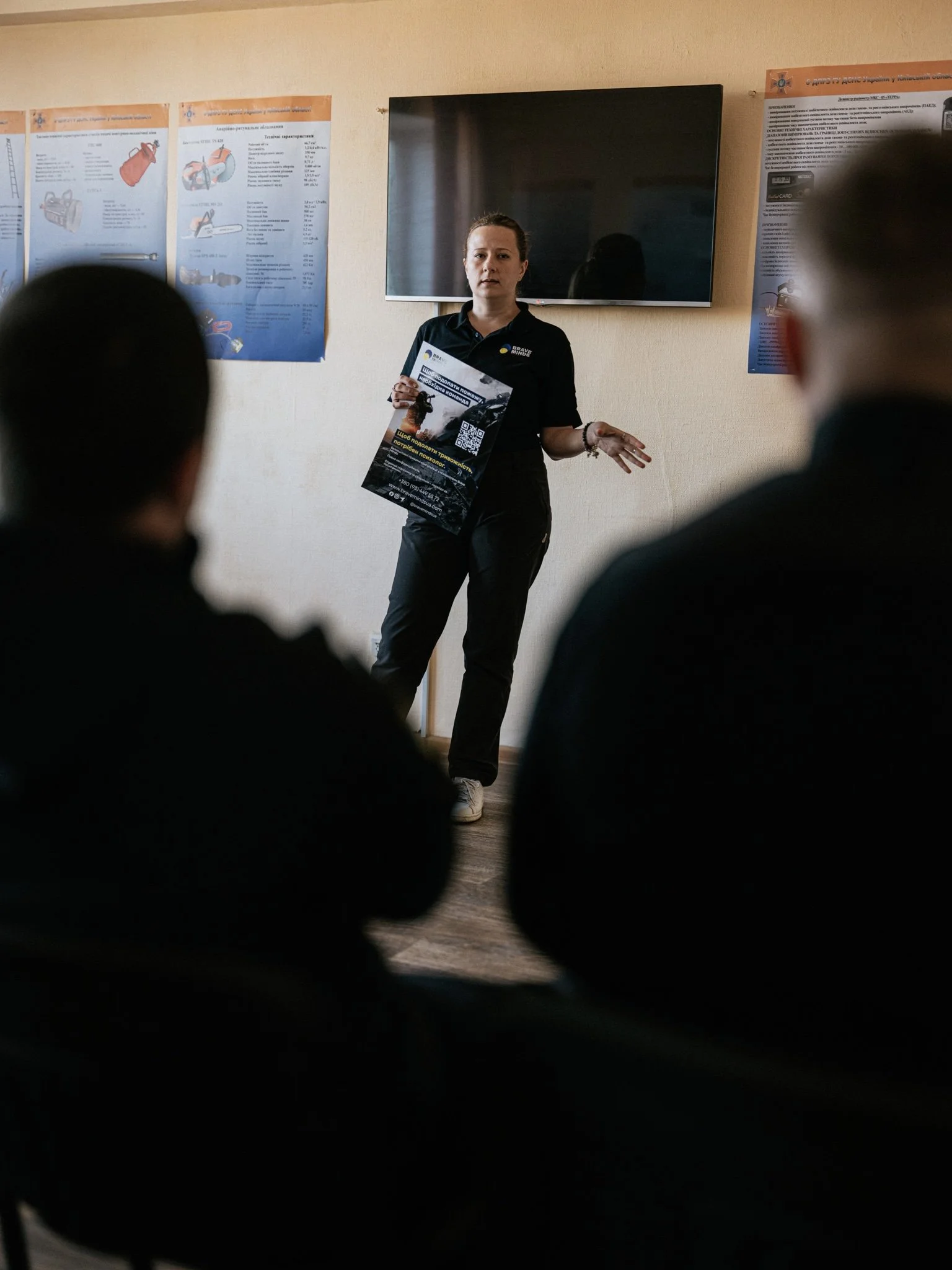
“Strong teams are built on trust, equality, unity and mutual support. When firefighters can openly talk to their colleagues about fear, difficult calls and the emotional challenges they face, they begin to understand that they are not alone. Knowing that others have experienced similar feelings can make it easier to ask for help and support one another.”
— Viktoriia Kryvolapchuk, CEO & Lead Psychologist at Brave Minds
But group sessions are only one part of our work. We also offer free individual psychological support with Ukrainian psychologists. These conversations are completely private and confidential. Rescuers can come to us with any concern, whether it is directly connected to their work or something happening in their personal life.
There is no requirement to have a specific diagnosis or to be in crisis. Sometimes a person may simply need one conversation. Sometimes they may want to continue with regular therapy. And sometimes they may not know what they need until they have spoken to someone. We leave the choice with them.
The psychological support offered through Brave Minds is designed to meet people where they are. Our psychologists work with panic attacks, anxiety, the emotional impact of traumatic experiences and personal difficulties, while recognising that every rescuer is also a person with their own relationships, family, worries and hopes.
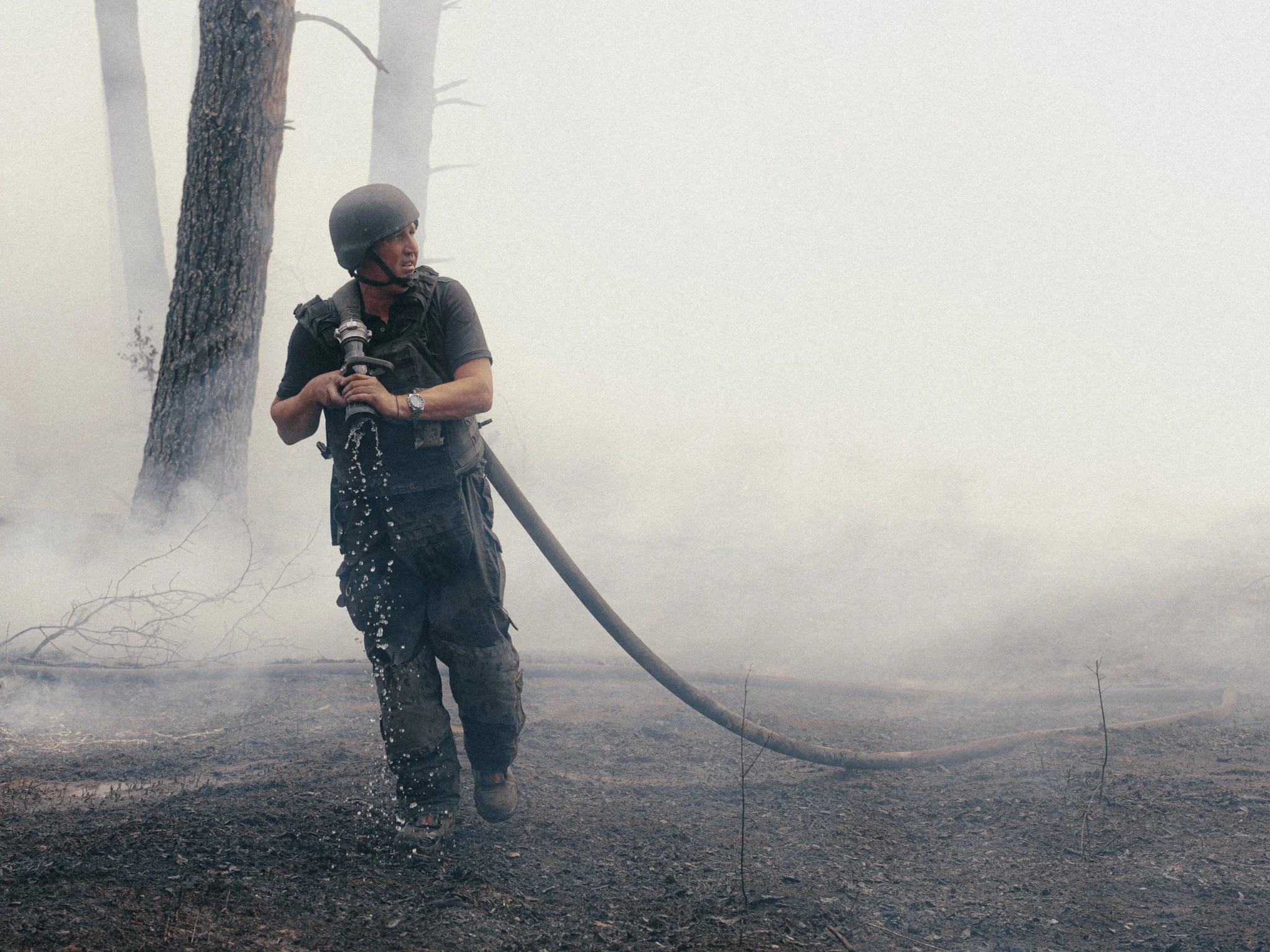
We also understand that firefighters are not simply exposed to one traumatic event. Their work is continuous. A fire itself may not have changed, but everything surrounding it has.
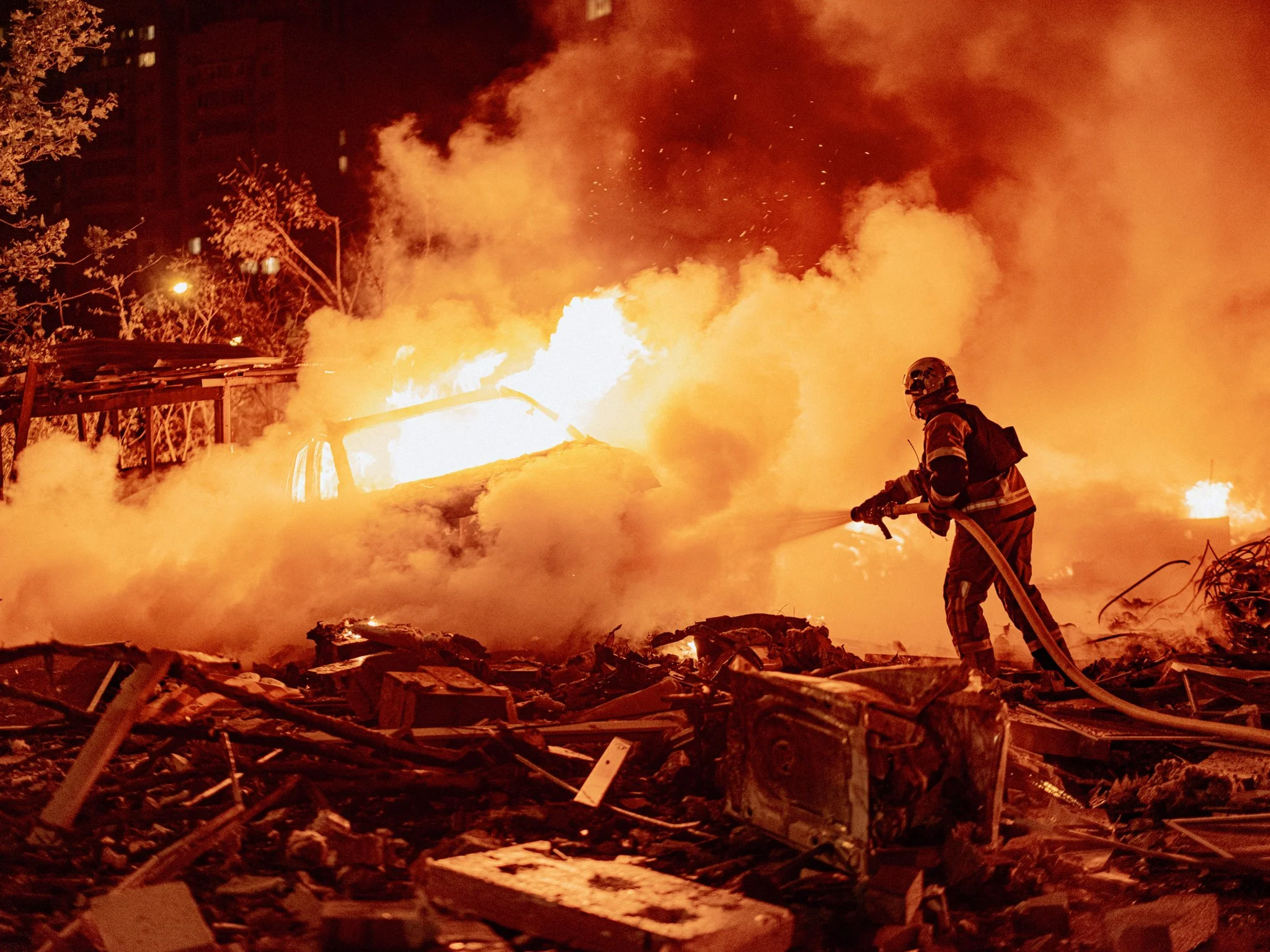
Today, a rescue operation can involve shelling, secondary strikes, explosions and the risk of unexploded ammunition. A rescuer may be working in an environment where no one can predict what will happen even a minute later.
The ability to keep going in these circumstances is remarkable. But resilience should not mean having to carry everything alone. That is why Brave Minds continues to visit fire stations across Ukraine.
We want more rescuers to know who we are, meet our psychologists and understand that support is available whenever they need it. Whether it is one conversation or a longer journey through therapy, the support is free, confidential and available on their terms.
We have already met rescuers across Kyiv, Kharkiv, Rivne and Chernihiv. We will continue travelling to more stations, meeting more teams and making sure that the people who are there for others know that someone is there for them, too.
Because supporting those who protect others means supporting the people behind the uniform.
